Flavor Renaissance 味來復興
Flavor Renaissance
Yi-Hsuan Chen, Hsiao-Chiao Su
2026 / Speculative Design / Food-based materials, mixed media

陳苡瑄、蘇筱喬
2026/ 推測設計 / 食物媒材、複合媒材
Contemporary food culture is increasingly driven by variety and convenience. As less time is spent preparing food, people constantly seek new flavours and combinations, rather than developing a deeper appreciation of a single ingredient and its complexity. Combined with increasingly automated lifestyles and AI-assisted decision-making, this pattern of consumption gradually distances us from our senses, turning eating into an almost unconscious routine.
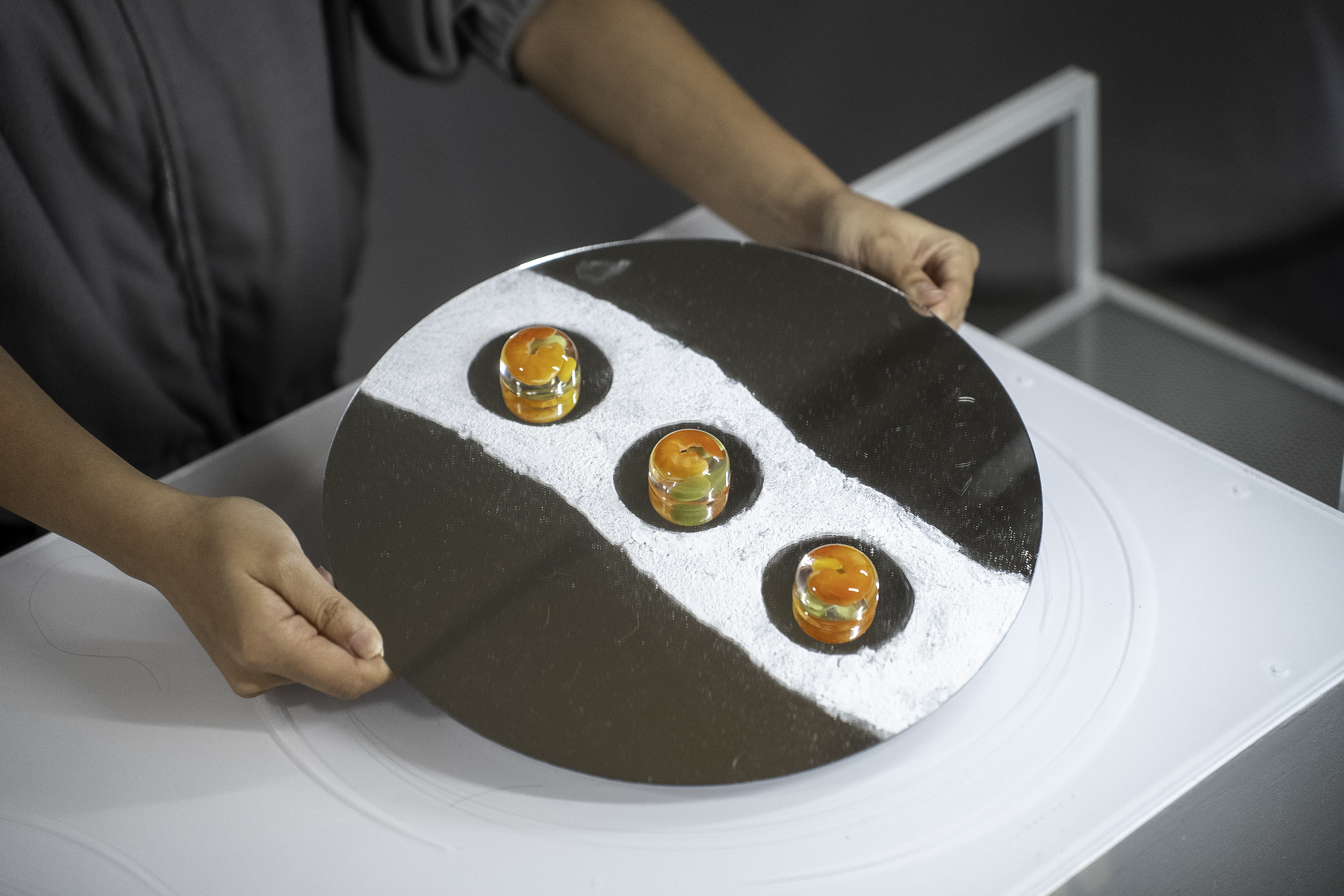
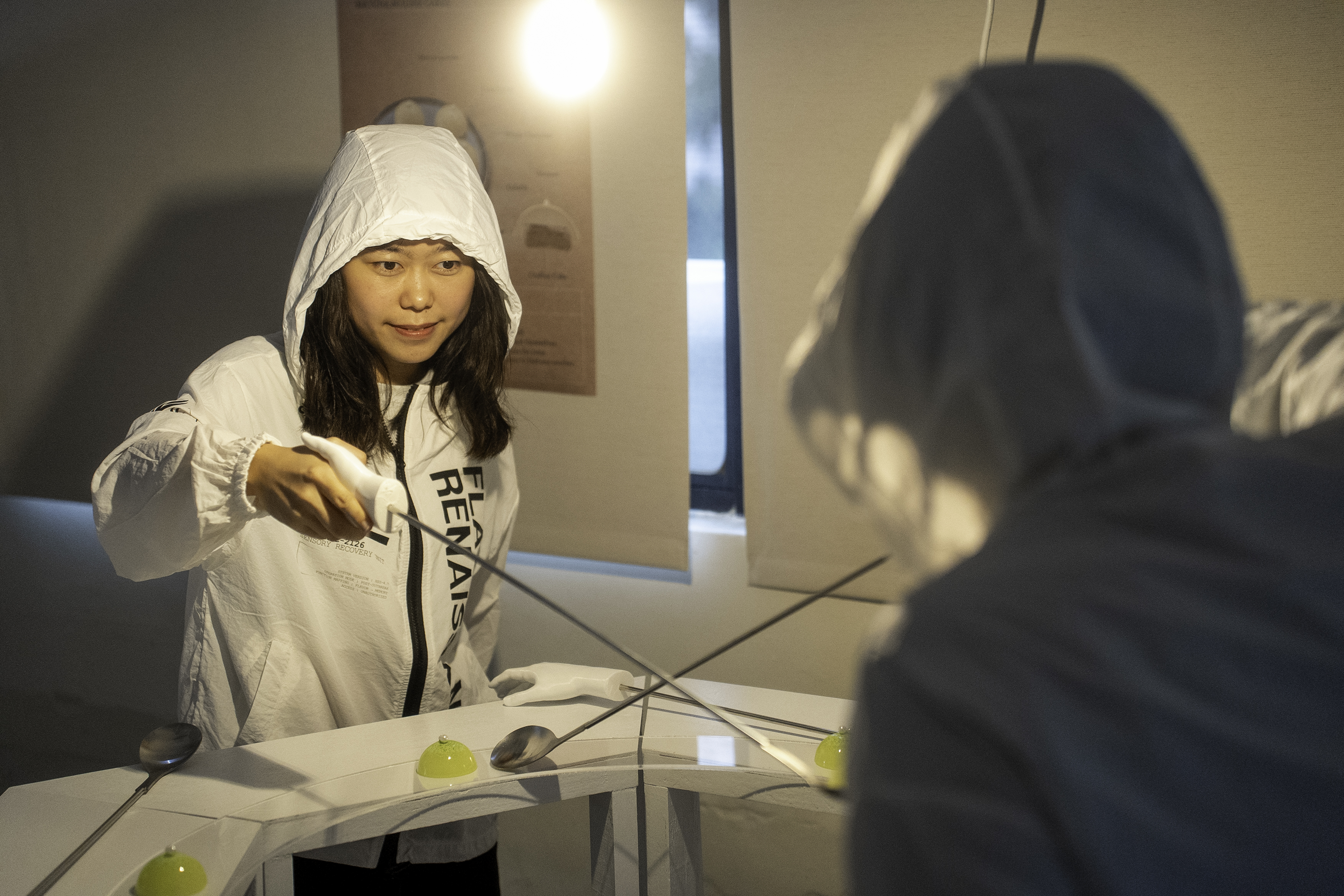
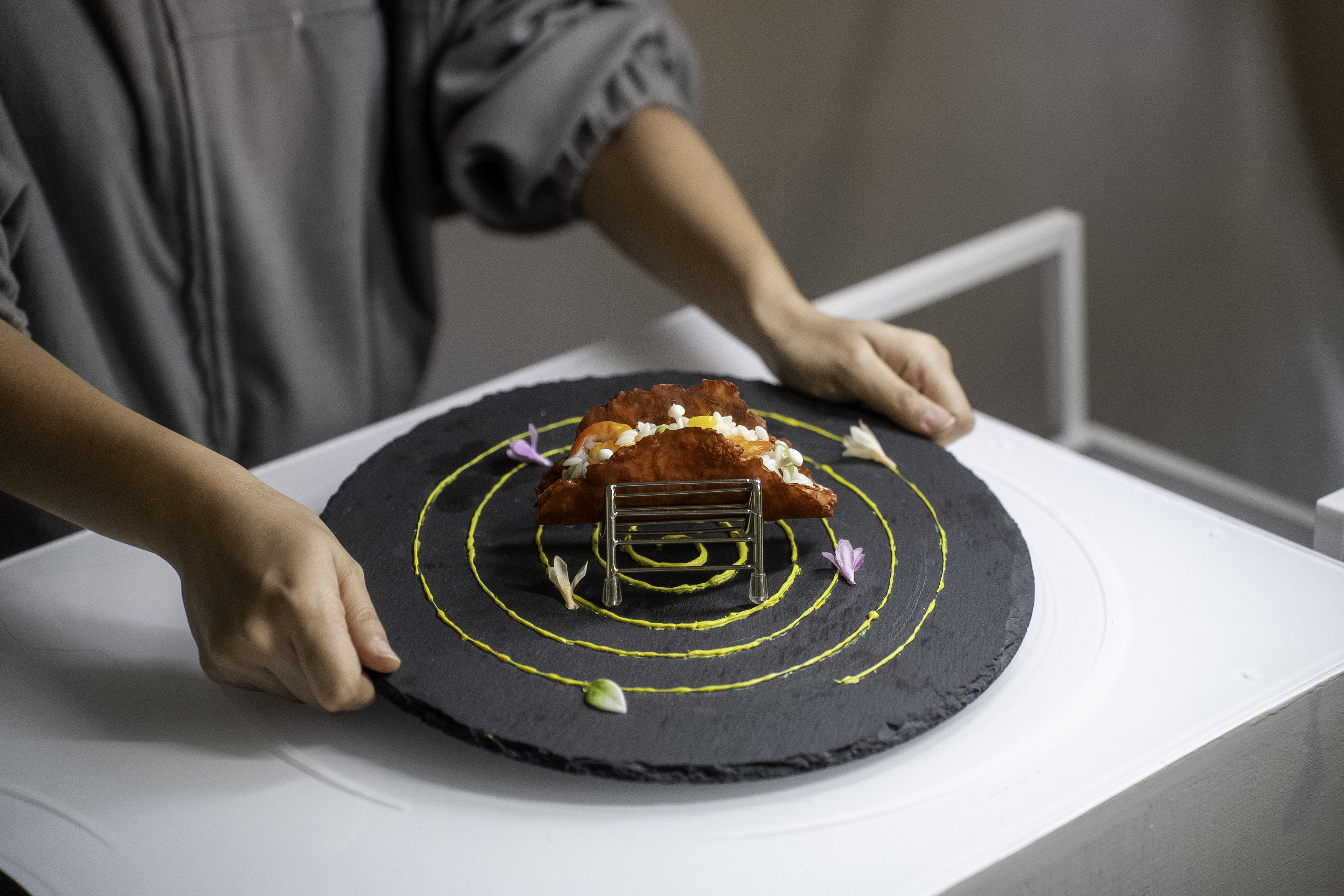
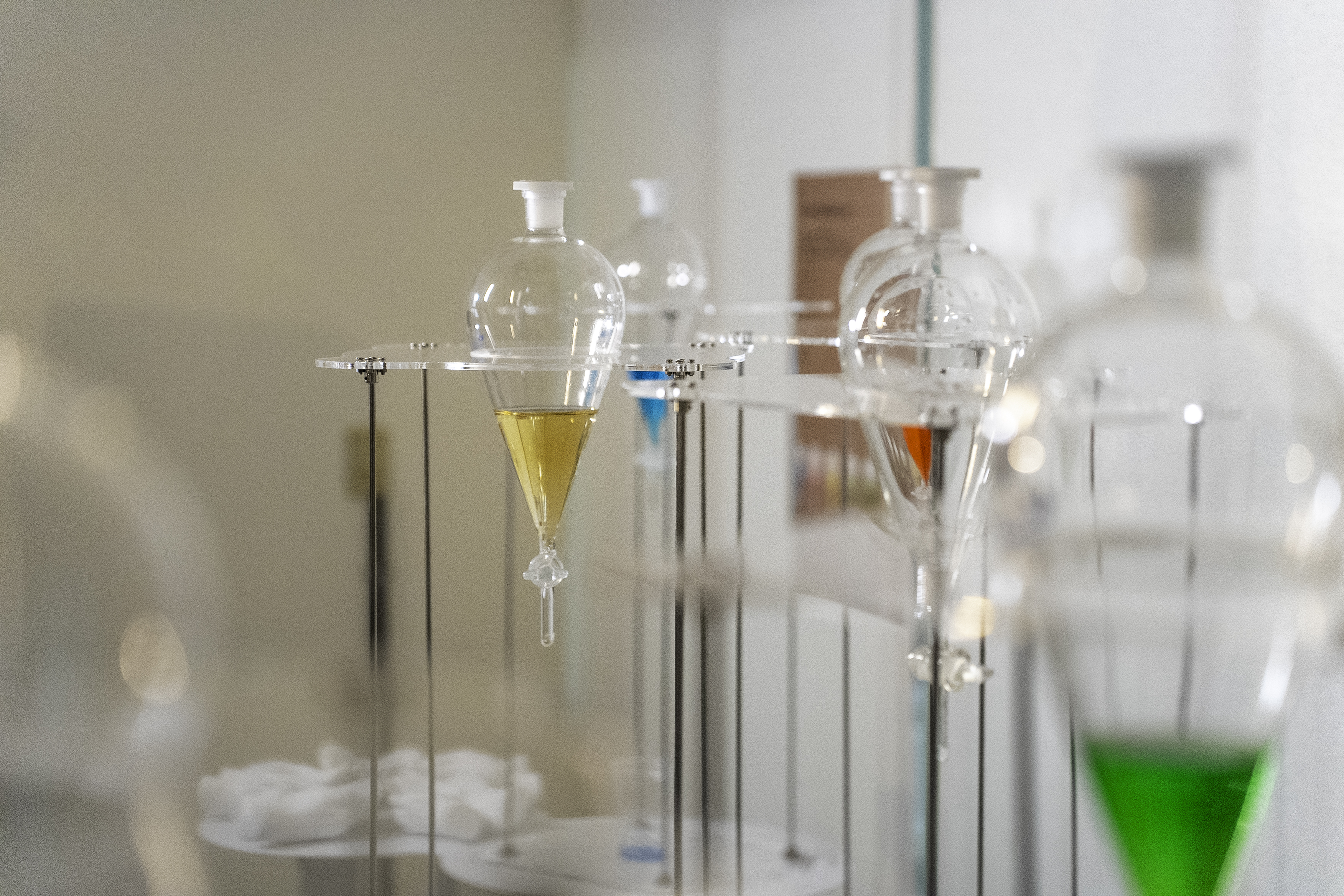
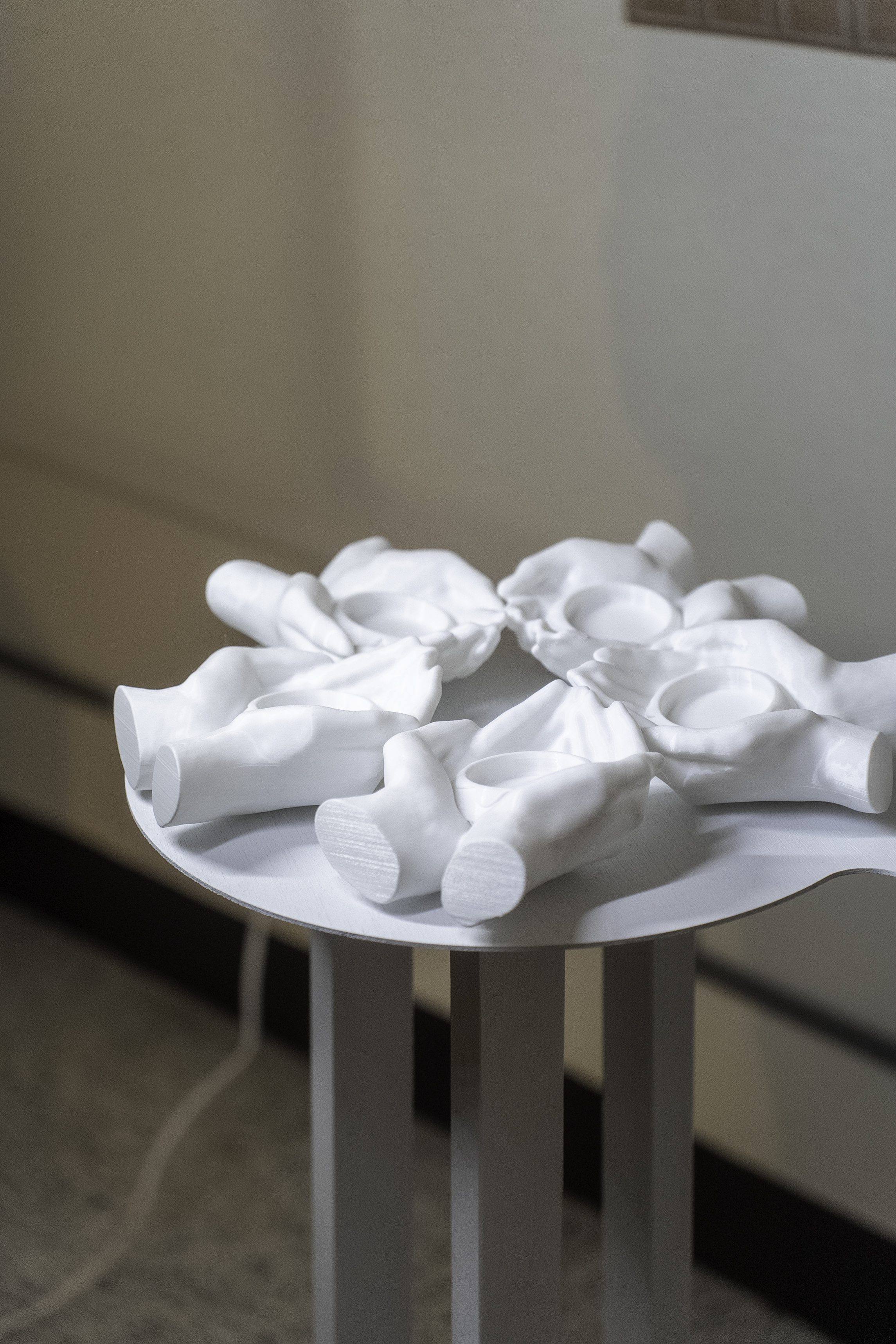
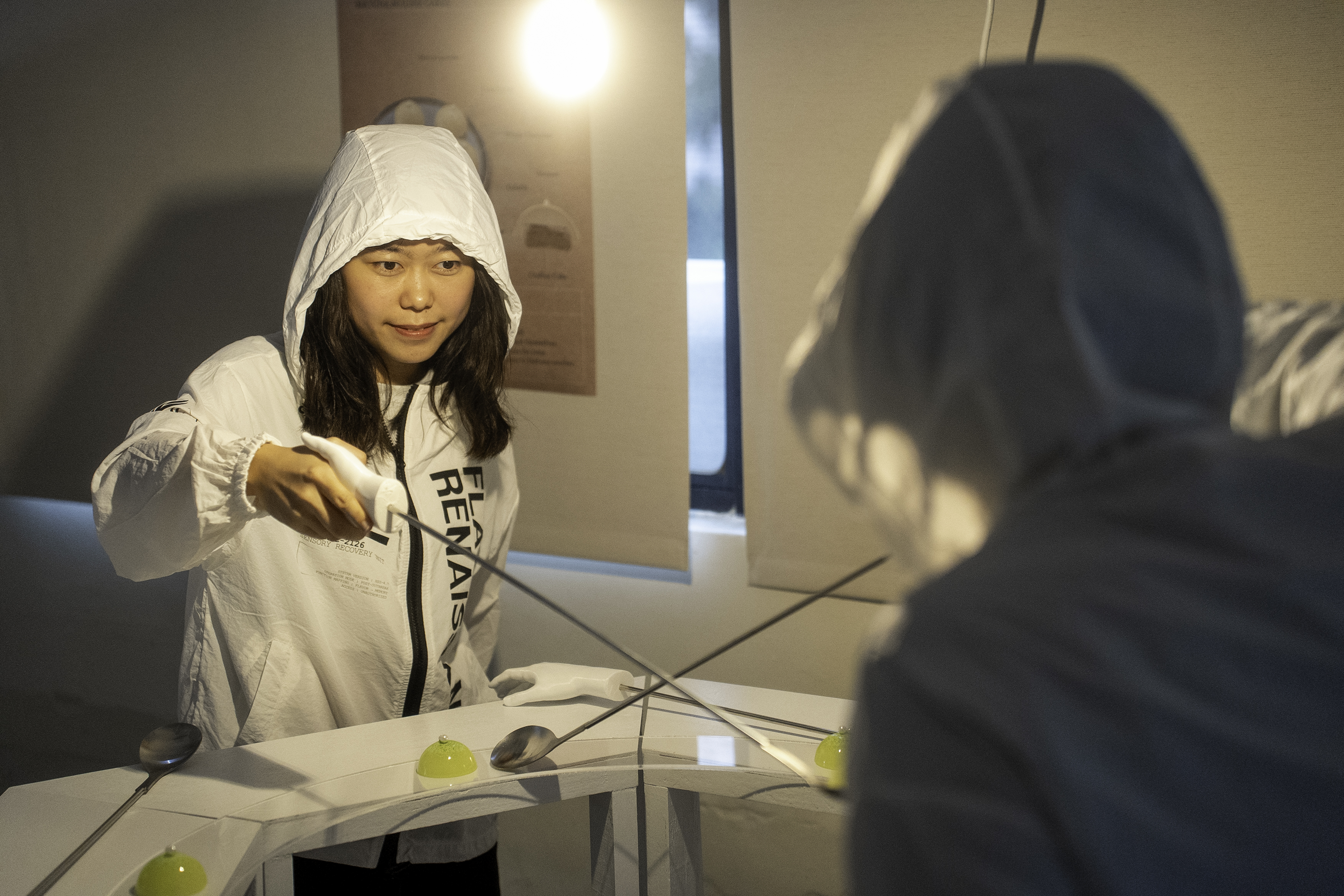
Pushed to the extreme, these tendencies lead to the idea of “feed”: food that is varied in flavour, modular in production, highly efficient, and requires little emotional engagement. Flavor Renaissance begins with this imagined future and asks: when eating is reduced to little more than energy intake, how might we rediscover its sensory depth and meaning? Through experiments with texture, form, and ways of eating, the project reimagines food as something to be consciously experienced, inviting us to slow down, sense, and reflect.
The work also considers the role of food in a future increasingly shaped by virtual and digital systems. If our experiences can one day be simulated or replaced, food may remain one of the few things we must still physically touch, taste, and consume. In this sense, eating becomes more than a biological necessity; it becomes a reminder of our connection to the physical world.
味來復興
現代飲食的趨勢逐漸朝向橫向發展。食物的製作時間越來越短,人們總是渴望新的組合與變化,而非長時間的深入理解某一食材的風味與層次。這樣的飲食模式與高度自動化、由 AI 主導選擇的生活型態密切相關,使人們的感官逐漸退化,進食成為一種無感的例行公事。
當我們將這些飲食趨勢推向極端,發現「飼料」這種進食形式完美符合當代邏輯的進化結果:多元風味、模組生產、快速方便、低感情投入。《味來復興》便是從這個極端出發,試圖反向提問:當進食只剩能量補給,該如何喚回進食的感官與意義?我們嘗試透過質地、形狀、攝食方式的設計,將食物重新塑造成「可被意識到的物件」,喚起人們對飲食的感官與思考。
我們希望透過這件作品探討在虛擬與數位逐漸主導的未來社會中,食物該如何仍保有作為真實物件的可能性。當一切感官都能被虛擬取代時,也許進食是我們與現實世界連結最後的證明。